Charting Certification Pathways for Random Number Generators in Eastern Canada's Digital Table Offerings
Amir Jung · Nov 9, 2026
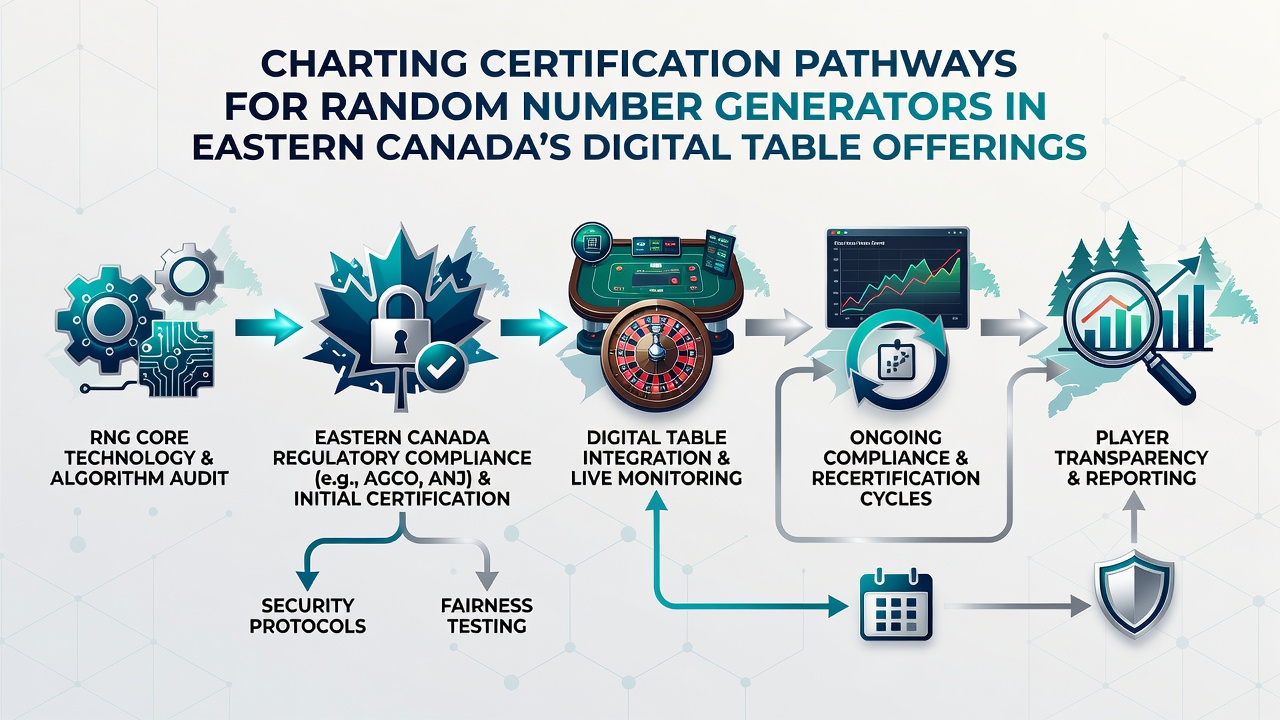
Charting Certification Pathways for Random Number Generators in Eastern Canada's Digital Table Offerings
Random number generators form the backbone of digital table offerings across Eastern Canada, where operators in Quebec, Nova Scotia, New Brunswick and Newfoundland deliver online blackjack, roulette and poker through regulated platforms. Certification pathways ensure these generators meet statistical standards before deployment, and observers note that multiple layers of testing occur before any system receives approval for live play.
Core Standards Governing RNG Approval
Provincial regulators require compliance with ISO/IEC 19790 and GLI-19 standards, which define test suites for randomness, unpredictability and resistance to prediction attacks. Data from testing laboratories shows that generators undergo at least 1 billion bit sequences across multiple seed values before passing initial statistical batteries, while subsequent reviews examine long-term distribution patterns and cycle lengths. Researchers at Canadian institutions have documented how these tests adapt when operators introduce live dealer hybrids that combine physical card shuffles with RNG-driven side bets.
Provincial Pathways in Quebec and Atlantic Regions
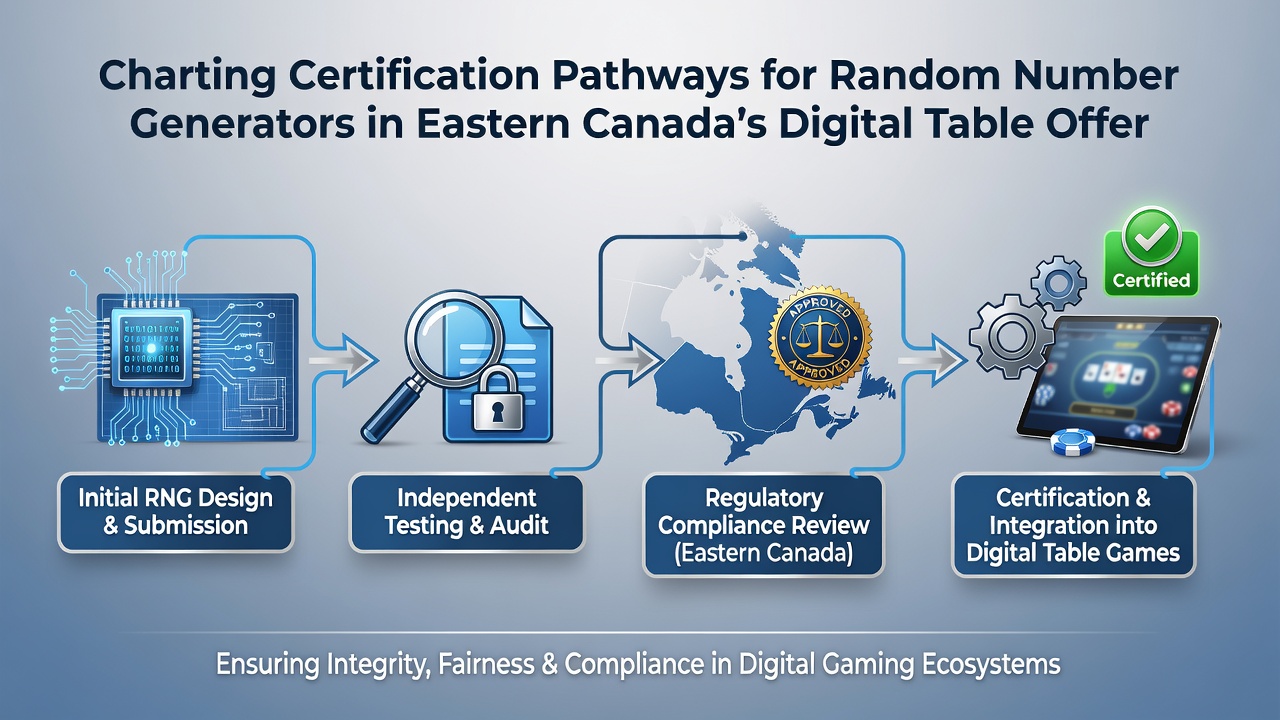
Quebec's regulatory framework routes RNG submissions through the Régie des alcools, des courses et des jeux, where vendors first submit source code and hardware specifications to accredited labs. Once preliminary reports clear, operators conduct integration testing on sandbox environments that mirror production servers, and approval timelines typically span 8 to 14 weeks depending on the complexity of table variants offered. In Atlantic provinces, the Atlantic Lottery Corporation coordinates with third-party auditors to verify that RNG outputs align with published return-to-player percentages, and figures reveal that joint reviews between Nova Scotia and New Brunswick regulators have streamlined documentation requirements since 2024.
Testing Laboratory Roles and November 2026 Updates
Accredited laboratories such as Gaming Laboratories International and BMM Testlabs maintain Eastern Canadian offices that handle sample collection and on-site audits. These facilities run Diehard and NIST statistical suites alongside proprietary entropy assessments, and operators often schedule re-certification cycles every 12 months or after any firmware change. In November 2026 several labs plan expanded capacity for quantum-resistant algorithm evaluations, reflecting growing interest in post-quantum cryptography among provincial oversight bodies.
Integration with Digital Table Ecosystems
Once certified, RNG modules connect to game servers through encrypted APIs that log every call and response for audit trails. Observers note that Eastern Canadian platforms maintain separate certification records for each table variant, because side bets and progressive features introduce additional random variables that must be independently validated. Studies from industry research groups indicate that synchronization between RNG outputs and live dealer feeds requires timestamp verification accurate to the millisecond, preventing any possibility of sequence manipulation.
Documentation and Renewal Requirements
Operators submit annual renewal packages that include updated entropy source analyses and incident logs, while regulators retain the right to request unscheduled spot checks. Data shows that most rejections stem from insufficient documentation of seed generation processes rather than actual statistical failures, and this pattern has prompted several certification bodies to publish detailed checklists in both official languages. Those who manage compliance programs report that maintaining bilingual records reduces review delays when submissions cross provincial boundaries.
Conclusion
Certification pathways for random number generators in Eastern Canada's digital table offerings combine laboratory testing, regulatory review and ongoing monitoring into a structured sequence that adapts to new game formats. As November 2026 approaches, laboratories and operators continue to align documentation practices with emerging technical requirements, ensuring that statistical integrity remains consistent across Quebec and Atlantic platforms.